
Oral Oncology Adherence and Symptom Monitoring: Clinical Evidence
Synchronyx has built a growing clinical evidence base in oncology, with peer-reviewed findings, award-recognized research, and active trials conducted at leading cancer centers across the United States. Our solutions are deployed operationally across health systems and oncology programs, supporting patients and care teams with real-time monitoring and actionable data throughout the treatment journey.
Key Findings
92.8%
Medication Adherence
88.9%
Feasibility Achieved
75.8%
System Usability Score
23.3%
Real-Time Clinical Alerts
JCO Clinical Cancer Informatics, 2025.
This program has helped me so much. It has helped me stay on track and I haven't felt so alone taking this medicine."
— Patient with breast cancer

The Challenge
CDK4/6 inhibitors have transformed the treatment of hormone receptor-positive breast cancer. But efficacy in the clinic does not guarantee adherence at home. These therapies carry complex dosing schedules, significant side effect burdens, and high out-of-pocket costs. Real-world adherence measured through claims data ranges from 57% to 86% across published studies.
The gap between prescribed and actual use represents lost clinical value, increased toxicity risk, and preventable treatment interruption.
Care teams often have no visibility into what is happening between visits until a problem has already taken hold. And the reasons patients miss doses, side effects, anxiety, depression, financial hardship, and health-related social needs, are rarely captured in a way that supports timely intervention.
The SMART Reach Program
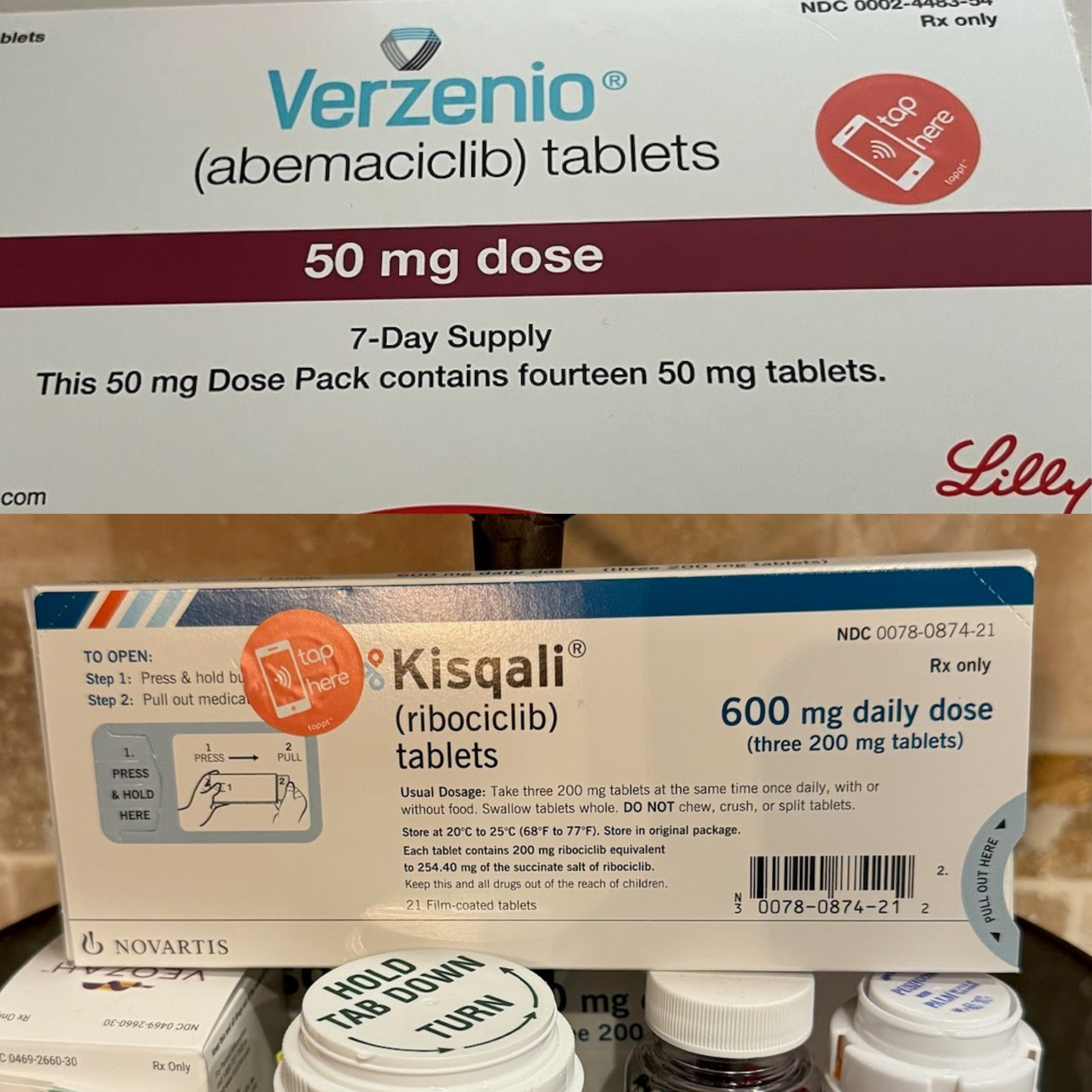
SMART Reach (Symptom and Adherence Monitoring in Hormone Receptor-Positive Breast Cancer) was a prospective single-arm feasibility trial evaluating whether Tappt's smart label-enabled remote therapeutic monitoring platform could support real-world CDK4/6 inhibitor adherence and symptom management.
The study was conducted at 3 large comprehensive cancer centers in the United States, and included women with early- and advanced-stage breast cancer prescribed abemaciclib, ribociclib, or palbociclib.
In this study, participants used Tappt® NFC-enabled smart labels affixed to their CDK4/6 inhibitor blister packs to record each dose at the moment of administration. Biweekly symptom check-ins were delivered by text message. Oncology teams received real-time alerts when a patient's adherence dropped below 80% or when moderate to severe symptoms were reported.
Supported by: Independent educational grants from Eli Lilly and Company and Novartis Pharmaceuticals Corporation.
What the Research Found
-
Mean CDK4/6 inhibitor adherence was 92.8% as recorded through the Tappt platform
89% of participants maintained adherence above 80% across the monitoring period
Patients with a history of anxiety or depression showed an 8.3 percentage-point lower adherence rate, identifying a clinically meaningful high-risk subgroup
-
88.9% of participants used the platform for 30 or more days, surpassing the pre-specified feasibility benchmark of 70%
Mean duration of platform use was 77.7 days across a 90-day study window
90.1% completed the follow-up survey
-
Mean System Usability Score of 75.8, exceeding the established acceptability benchmark of 68
Participants who self-identified as Black reported usability scores 12 points higher than White participants, a statistically significant finding with direct implications for health equity strategy
-
65.3% of participants reported at least one treatment-related symptom during monitoring
23.3% triggered real-time symptom alerts to their oncology team
Alerts resulted in direct clinical action including care plan modifications, medication adjustments, and out-of-cycle patient contact
Most common symptoms captured: menopausal symptoms, severe diarrhea, extreme fatigue, dry or sore mouth
SDOH and Health Equity
A companion analysis presented at the 2025 Pharmacy Quality Alliance Annual Meeting examined the role of social determinants of health in CDK4/6 inhibitor adherence. Patients with documented SDOH challenges showed lower adherence and greater symptom burden, underscoring the need for proactive, equity-focused strategies in cancer care.
The monitoring platform successfully identified patients facing SDOH-related barriers and enabled timely, tailored clinical interventions. These findings highlight the potential of real-time digital monitoring to bridge gaps in care and support medication adherence in vulnerable populations.
Publications and Presentations
Peer-reviewed publication: Graetz I, Arshad S, Cai C, Hernandez S, Sapir T, Carter J, Heggen C, McKinnon KE, Yang F, Sadigh G, Meisel J. Feasibility of a Smart Label-Enabled Remote Therapeutic Monitoring Intervention to Support Cyclin-Dependent Kinase 4/6 Inhibitor Adherence in Breast Cancer Care. JCO Clinical Cancer Informatics. 2025;9:e2500152. Read the full paper →
Gold Medal, 2025 Pharmacy Quality Alliance Annual Meeting: Arshad S, Sapir T, Carter J, Heggen C, McKinnon K, Cai C, Yang F, Sadigh G, Meisel J, Graetz I. Feasibility Trial of the Systematic Monitoring and Adherence Realization for Treatment in Hormone Receptor-Positive Breast Cancer (SMART Reach). Journal of the American Pharmacists Association. 2025;65(3):102398.
ASCO Annual Meeting 2025: Meisel J, Sapir T, Graetz I, Arshad S, Rodriguez M, Dooyema S, Carter J, Heggen C, McKinnon K. Improving Adherence to CDK4/6 Inhibitors in Breast Cancer Through Remote Therapeutic Monitoring with Real-Time Adherence Tracking and Actionable Alerts. Journal of Clinical Oncology. 2025;43(16 suppl):e12520. Read the abstract →
2025 Pharmacy Quality Alliance Annual Meeting: Sapir T, Beckmann L, Arshad S, Carter J, Heggen C, McKinnon K, Meisel J, Graetz I. The Role of Social Determinants of Health in Medication Adherence for CDK4/6 Inhibitors in Breast Cancer: Insights From a Remote Monitoring Tool. Journal of the American Pharmacists Association. 2025;65(3):102398.
Active registered trial: SMART Study. ClinicalTrials.gov ID: NCT07073807. View registration →
If your work involves patient support in oncology, adherence monitoring for clinical trials, or real-world evidence generation, we would like to understand your program and share how Tappt® has been used in similar settings.
Tappt is currently deployed across health systems, cancer centers, specialty pharmacies, and oncology care teams, and works alongside remote patient monitoring programs and patient assistance programs to support patients through complex treatment regimens.